
Multifunctional Hidden Camera Detector
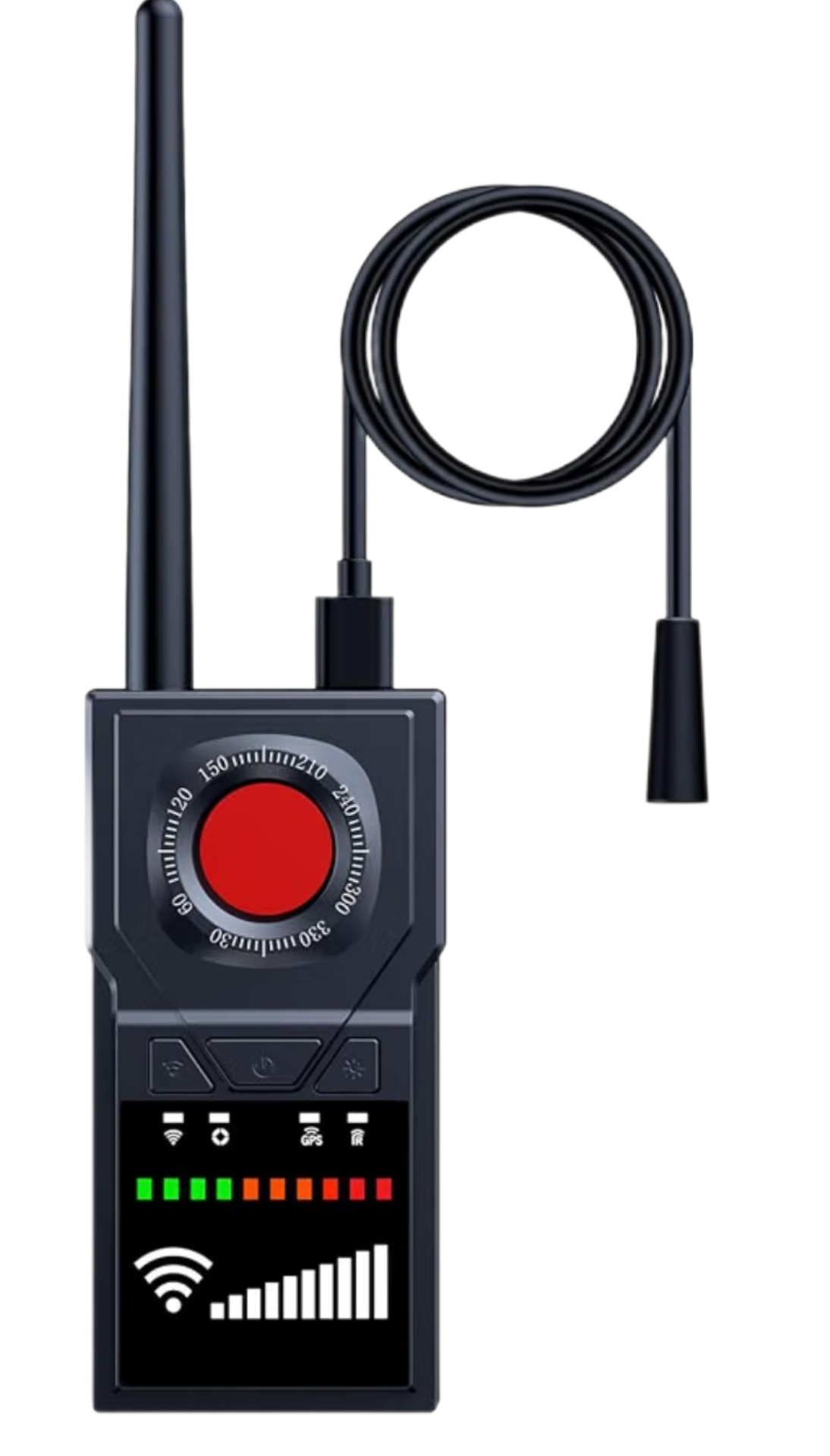
Multifunctional Hidden Camera Detector
The Multifunctional Hidden Camera Detector is a compact and practical privacy-protection device designed to help users inspect personal spaces for certain types of concealed cameras and other potentially unwanted surveillance equipment. It can be useful in bedrooms, hotel rooms, rental properties, offices, changing areas, meeting rooms, and other private spaces where users want an additional layer of awareness. With its multifunctional design, the device may combine several detection methods in one portable unit, depending on the specific model, making it convenient for people who frequently travel or want a small privacy-checking tool that can be carried easily.
Many hidden-camera detectors are designed to identify potential surveillance devices by using optical lens detection, radio-frequency (RF) scanning, or other electronic detection methods. An optical detection function may help identify reflections from camera lenses, while an RF function may detect certain radio signals emitted by compatible wireless devices. Some models may also include magnetic-field detection or other features. Because hidden cameras can operate in different ways, no detector can guarantee that every concealed camera or recording device will be identified. Performance depends on the detector’s specifications, the type of device being searched for, distance, surrounding electronic interference, and the environment.
The compact size makes the detector convenient for travel and everyday privacy checks. It can be carried in a handbag, backpack, suitcase, drawer, vehicle, or office desk without taking up much space. Travelers may find it useful when checking unfamiliar accommodation, while professionals may use it as part of a general privacy-awareness routine. The portable design allows the device to be moved around a room and used to inspect different areas, although users should always operate it according to the manufacturer’s instructions and applicable laws.
Depending on the model, the device may feature adjustable sensitivity levels, indicator lights, audible alerts, vibration alerts, or a simple control interface. These features can help users understand when the detector senses a potentially relevant signal or optical reflection. A sensitivity adjustment can be useful because environments such as hotels, offices, and homes often contain legitimate wireless equipment, including routers, smartphones, Bluetooth devices, smart appliances, and other electronics. Learning how the particular model responds to normal electronic activity can help reduce confusion between ordinary devices and potential surveillance equipment.
The optical lens-detection function, when included, is designed around the reflective properties of camera lenses. Users may scan suspicious areas such as smoke detectors, clocks, decorative objects, electrical outlets, vents, light fixtures, or other objects that could potentially conceal a camera. A detected reflection does not automatically mean that a hidden camera is present, because many ordinary objects can also reflect light. For this reason, the detector should be treated as a screening tool rather than definitive proof of surveillance.
The RF detection function, when available, can provide another layer of inspection by searching for certain radio-frequency transmissions. This can be useful for identifying some wireless electronic devices that are actively transmitting signals. However, not every camera transmits continuously, and some devices may record locally without sending a wireless signal. Other household electronics can also produce RF activity, so users should interpret alerts carefully and investigate the surrounding environment rather than assuming every detection represents a hidden camera.
The multifunctional design makes the device suitable for a variety of privacy-checking situations. It can be used as a preliminary inspection tool in temporary accommodation, rental spaces, offices, meeting rooms, or other locations where privacy is important. Its straightforward controls can make it accessible to users without specialist technical knowledge, although understanding the limitations of each detection mode is important for obtaining more meaningful results. Customers should review the product manual to understand the exact detection range, supported frequencies, sensitivity settings, battery type, charging method, and other specifications.
For best results, users should conduct an inspection methodically and minimize unnecessary electronic interference where practical. When using an RF function, nearby Wi-Fi routers, mobile phones, Bluetooth accessories, smart devices, and other transmitters may produce alerts. When using optical detection, changing lighting conditions and reflective surfaces can affect what the detector identifies. Checking suspicious objects from multiple angles and using more than one detection method can provide a more thorough preliminary inspection.
Overall, the Multifunctional Hidden Camera Detector is a portable privacy-awareness tool designed to assist users in checking environments for certain detectable forms of concealed cameras and electronic surveillance equipment. Its combination of potential lens detection, RF scanning, alerts, adjustable sensitivity, and compact construction can make it a useful addition to a personal travel or security kit. Before purchasing, customers should carefully check the exact detection technologies, frequency range, detection distance, battery capacity, charging method, sensitivity controls, and included accessories, as capabilities vary considerably between models. The device should be used responsibly and in accordance with local privacy and surveillance laws.


Reviews
There are no reviews yet.